 Image 1 of 5
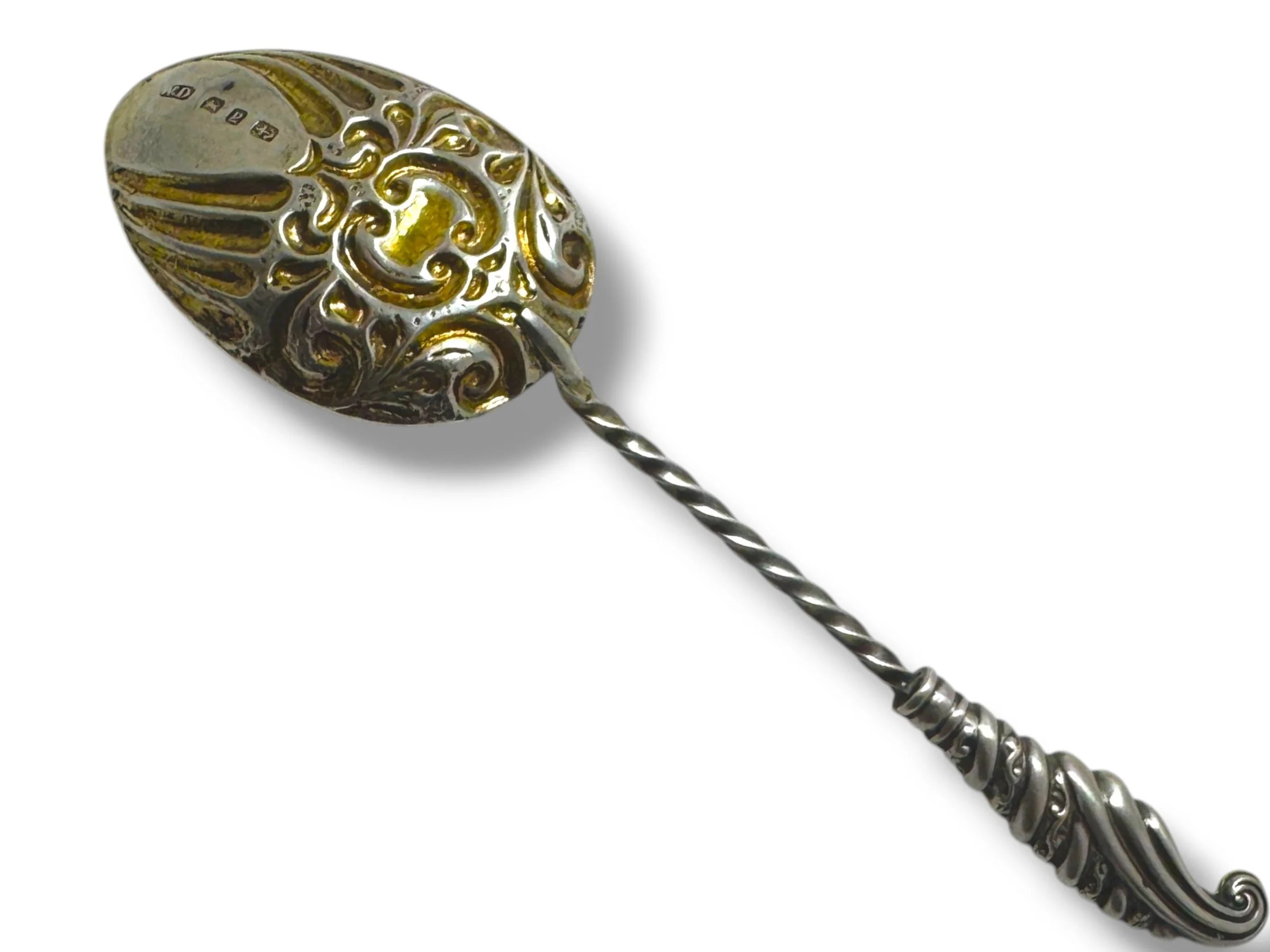 Image 2 of 5
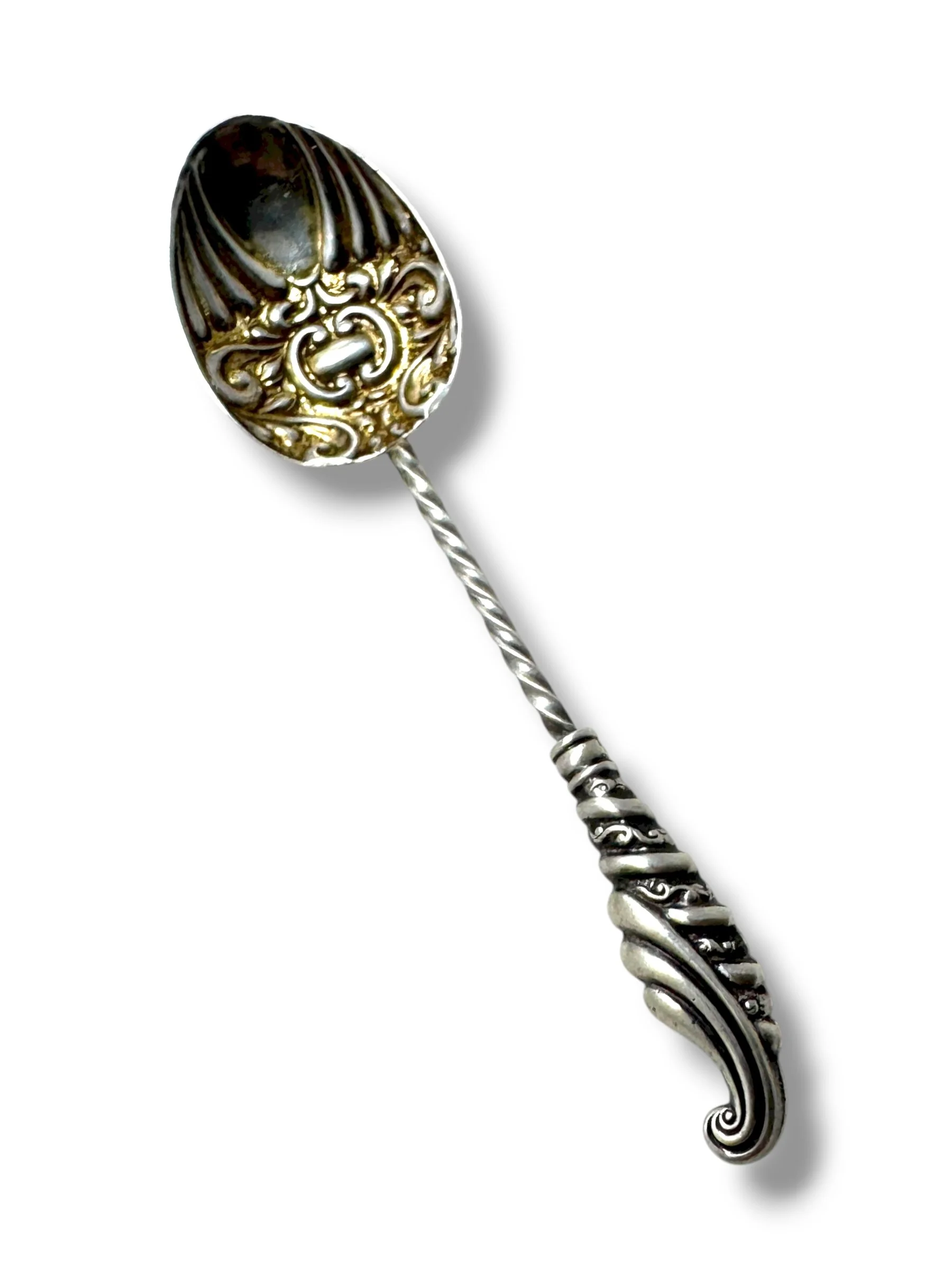 Image 3 of 5
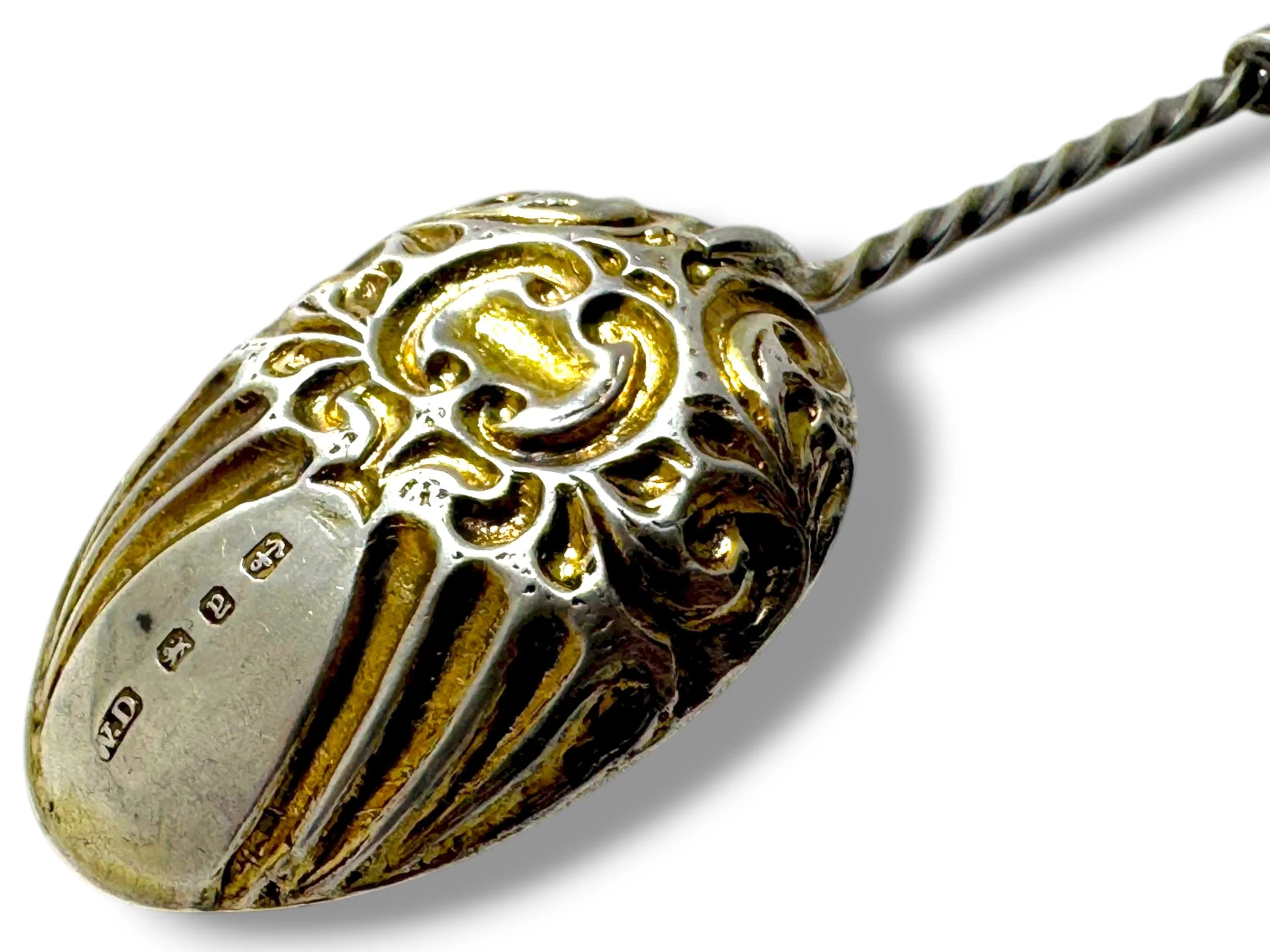 Image 4 of 5
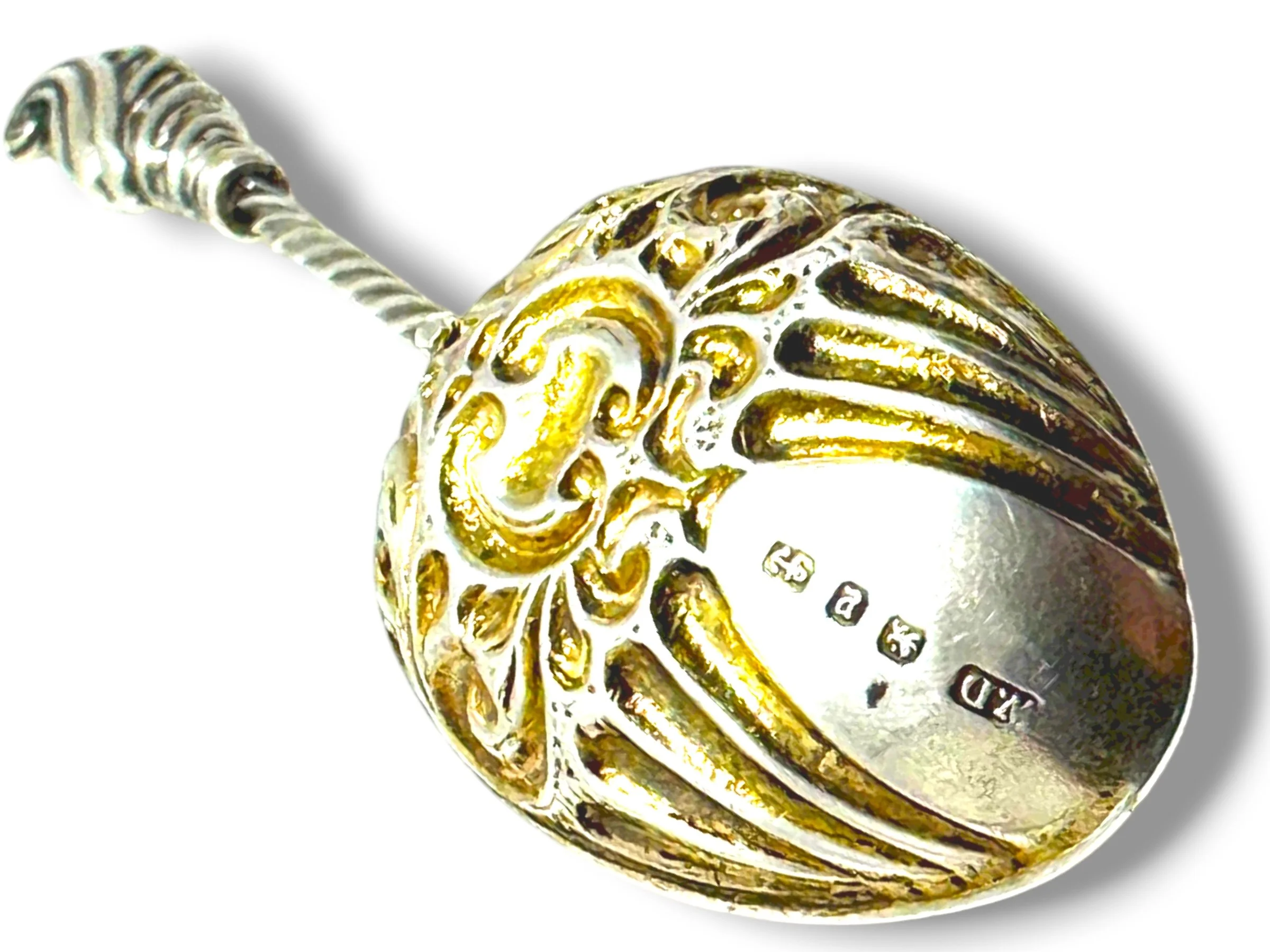 Image 5 of 5
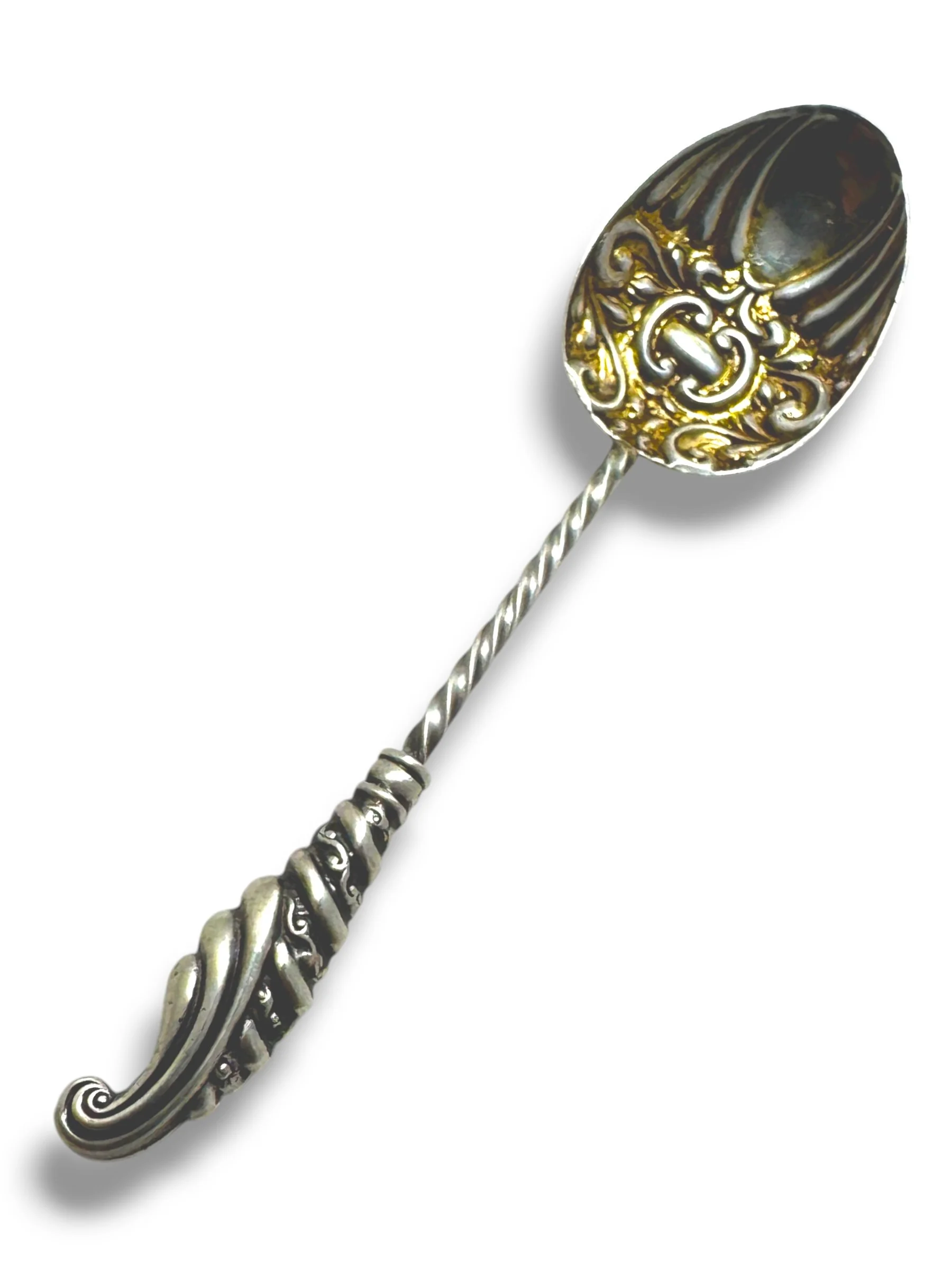
A beautifully detailed late-Victorian sterling silver spoon by Birmingham silversmith William Devenport, dated 1898. The twisted stem and ornate handle lead to a gilded, repoussé bowl, where traces of original gold vermeil highlight the intricate scrollwork. A fine example of transitional design from the Victorian to Art Nouveau era.
Details:
Sterling silver (92.5%)
Maker: William Devenport, Vyse Street, Birmingham
Hallmarks: Birmingham, 1898 (“y”)
Dimensions: 10.4 cm L × 2.4 cm W
Weight: 7.26 g
Features: Gilded bowl detailing, repoussé ornamentation, twisted handle
Era: Late Victorian / early Art Nouveau
Why It Matters
Pieces like this captured the artistic shift at the turn of the century - from strict Victorian formality to fluid, decorative expression. The surviving gilding reveals the craftsmanship and luxury of the period, making it a small but significant piece of Birmingham’s silver history.
A beautifully detailed late-Victorian sterling silver spoon by Birmingham silversmith William Devenport, dated 1898. The twisted stem and ornate handle lead to a gilded, repoussé bowl, where traces of original gold vermeil highlight the intricate scrollwork. A fine example of transitional design from the Victorian to Art Nouveau era.
Details:
Sterling silver (92.5%)
Maker: William Devenport, Vyse Street, Birmingham
Hallmarks: Birmingham, 1898 (“y”)
Dimensions: 10.4 cm L × 2.4 cm W
Weight: 7.26 g
Features: Gilded bowl detailing, repoussé ornamentation, twisted handle
Era: Late Victorian / early Art Nouveau
Why It Matters
Pieces like this captured the artistic shift at the turn of the century - from strict Victorian formality to fluid, decorative expression. The surviving gilding reveals the craftsmanship and luxury of the period, making it a small but significant piece of Birmingham’s silver history.